What Crypto Expert Testimony Covers
Crypto expert testimony is sworn opinion evidence from a specialist who explains how cryptocurrency systems actually work and what the records in a case show. In bitcoin mining and hosting disputes, that usually means answering four questions: what hardware was delivered and what it was worth, how the facility operated it, how much hashrate and revenue were really lost, and whether the contract terms were met. Aviran Vargas gives this testimony in depositions, federal court, and AAA arbitration. He has been retained six times and has testified five times, and his opinions are built from the pool data, power records, and maintenance logs he works with every week as an active mining operator. His work covers mining and hosting operations: hardware, power, facilities, and contracts. It does not include blockchain tracing or recovering stolen funds.
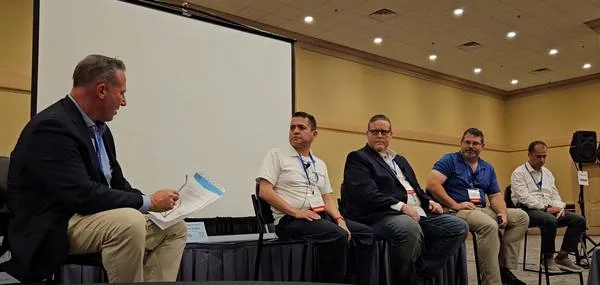
Testimony Built on Operations, Not Theory
Aviran testifies from work he does every week as the Director of Operations and Infrastructure at EZ Blockchain, where he manages more than 60 MW of live ASIC capacity. He deploys miners, diagnoses hashboards, manages uptime, and runs hosting sites.
That first-hand knowledge is hard for opposing counsel to shake, because the answers come from experience rather than from cramming for the deposition. He has faced aggressive cross-examination from skilled attorneys and held his ground each time.
Where Aviran Has Testified
Aviran served as an expert witness in Crypto Infiniti v. EZ Blockchain, a $15M federal jury trial in Chicago that ended in a complete defense verdict. He has also been retained and has testified before American Arbitration Association (AAA) panels, and has given sworn deposition testimony in federal proceedings. The records a mining site keeps, and what each one shows, are covered in What Records a Mining Site Keeps.
He has been retained by plaintiffs and by defendants, and his analysis is the same whichever side retains him.
Disclosure: EZ Blockchain, the defendant in Crypto Infiniti, is Aviran’s employer. His other engagements, including United States v. Kovar and the AAA arbitrations, are unrelated to EZ Blockchain.
How Is Crypto Explained to a Judge or Jury?
Usually by tying each technical term to a record already in the case. Hashrate is shown from pool reports, uptime from monitoring logs, power from utility invoices and meter data, and hosting terms from the agreement itself. Plain language and simple charts let a judge or jury follow the operational facts without specialist background.
The materials typically used include pool dashboards and payout histories, miner status screens and error logs, site photographs, power and temperature charts, and excerpts from the hosting or purchase agreement. Each one shows a different part of how a mining site runs, and together they give the court a timeline it can check against the documents. Aviran explains hashrate, uptime, ASIC hardware, power cost, and hosting terms in plain language, and he has testified in a federal jury trial and in AAA arbitration.
Subjects Aviran Testifies On
- Hosting agreement performance: promised uptime and hashrate versus what the facility delivered, billing, and unauthorized shutdowns.
- ASIC hardware valuation: fair market value of specific models on specific dates, and depreciation.
- Mining damages: lost revenue calculated from pool data, power rates, coin prices, and difficulty.
- Site operations: how maintenance, alarm response, cooling, and power management were carried out, compared with the agreement and the record.
- Decommissioning and moves: shutdown procedures, chain of custody, and hardware damaged in transit.
From Retention to Testimony
- Conflict check and first call. No charge. If there is a conflict, you hear it immediately.
- Document review. Hosting agreements, pool and power data, maintenance records, and the opposing expert's report if one exists.
- Written opinion. An expert report, a rebuttal report, or both, depending on the schedule and the case.
- Deposition. Preparation with counsel on the technical record, then testimony under oath.
- Trial or arbitration. Direct and cross-examination before a judge, jury, or AAA panel.
Deposition, Trial, and Arbitration Compared
| Setting | Who asks the questions | What it is used for | Rate |
|---|---|---|---|
| Expert report | None; written opinion | Discloses the opinions and the basis for them | $500/hr |
| Deposition | Mostly opposing counsel, under oath | Tests the opinions before trial; transcript can be used later | $675/hr |
| Federal or state trial | Retaining counsel on direct, opposing counsel on cross | Evidence the judge or jury weighs in the verdict | $775/hr |
| AAA arbitration | Both counsel, and often the arbitrators directly | Evidence for a private panel's award | $775/hr |
What to Send for a First Review
- The hosting agreement and every amendment or supplemental agreement
- Power purchase or energy agreements
- Uptime and hashrate logs, pool data, and power draw records
- RMA and maintenance records
- Client communications about performance
- Financial records supporting the claimed loss
- The opposing expert's report, if one has been produced
Incomplete records are common. Send what you have and Aviran will tell you what is missing.
Common Questions
What is a crypto expert witness?
A crypto expert witness is a qualified specialist who explains cryptocurrency, mining, and blockchain issues to a court or arbitration panel and offers opinions on disputed technical and operational questions. Aviran focuses on bitcoin mining operations, ASIC hardware, and hosting agreements.
Can you testify in both trials and arbitration?
Yes. Aviran has testified in a federal jury trial and before AAA arbitration panels, and has given deposition testimony in federal proceedings.
How much does crypto expert testimony cost?
Deposition testimony is billed at $675 per hour and trial or arbitration testimony at $775 per hour. Consultation, review, and reports are $500 per hour. Travel is billed at actual cost. The full rate schedule is on the home page.
How quickly can you review a case?
An initial case evaluation typically takes one to two weeks, depending on document volume. If your deadline is tighter, call 773-312-4124 to discuss availability before sending materials.
Do you testify for plaintiffs or defendants?
Both. He has been retained by plaintiffs and by defendants. The opinion comes from the operational record, not from which side is paying, and a technical conclusion does not change based on what a client hopes to hear.
Evaluating a crypto dispute?
Aviran offers a no-charge conflict check and initial case review. Available nationwide. See hourly rates.