What an ASIC Miner Hosting Expert Witness Evaluates
An ASIC hosting expert witness looks at a mining host from the inside and answers two questions a court or arbitration panel cannot answer on its own: how was the site actually operated, and if machines failed or underperformed, what does the record show about why. The answers come from the site record: the hosting agreement, temperature and power logs, alarm histories, maintenance and RMA records, and the miners' own error logs. Aviran Vargas runs hosting operations today and has written operations documentation covering site reliability and severe weather response, so he is familiar with how those records are created and what each one can and cannot show. Disputes centered on the hosting contract itself, such as deposits, power costs, and curtailment, are covered on the crypto hosting expert witness page. Hardware purchase disputes, such as ASIC orders that never shipped, are discussed on the blog.
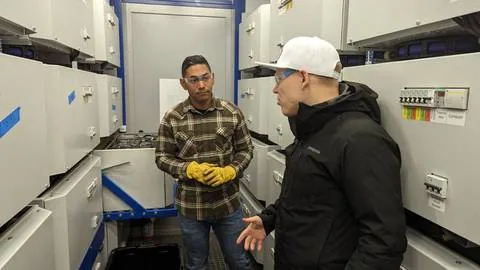
Miner Error Logs and RMA Records
A hosted miner leaves its own record: error and kernel logs, hashboard and chip counts, fan and temperature readings, repair tickets, and RMA history with the manufacturer. Aviran reads those records alongside the site's temperature and power logs and explains what they can and cannot establish about a failure. Questions about uptime, force majeure, and curtailment terms in the hosting agreement are covered on the crypto hosting expert witness page.
Site Operations Opinions
He is retained to give opinions on how bitcoin mining sites were operated in a particular matter, from severe weather response to monitoring, maintenance, and communication with customers. Each opinion is based on the record, the agreement, and the circumstances of that case. He has authored operations documentation covering site operations, reliability, and severe weather response.
How Is the Cause of an ASIC Failure Determined?
Cause is usually examined by comparing a failed machine’s own logs with the site’s records for the same period. The machine side includes kernel logs, error codes, hashboard and chip readings, and repair or RMA notes. The site side includes power, temperature, and maintenance records kept while the machine was running.
Records that typically come up include miner kernel and error logs, pool hashrate by worker, power monitoring and PDU or breaker logs, intake and exhaust temperature history, firmware versions and change records, shipping and receiving inspections, and the manufacturer’s RMA or repair findings. The timing of a failure next to a power event, a weather event, a firmware change, or a move is often part of the discussion. Which records exist, and how complete they are, varies from site to site. Aviran has testified on the causes of ASIC hardware failures, and he reviews the operational assumptions inside damages models.
Areas Typically Examined
Hosting disputes tend to look at the same operational areas. Which ones matter, and how, depends on the agreement, the equipment, and the facts of each case.
- Power: how power was distributed and loaded, and how outages and power quality events were recorded. Mining electrical basics
- Cooling and airflow: intake and exhaust temperatures over time, and how airflow was arranged. Hot aisle and cold aisle
- Environment: dust, filtration, and humidity at the site across seasons. Dust, humidity, and corrosion
- Monitoring and alarms: how alerts were generated, received, and logged.
- Severe weather: how cold starts, heat events, and shutdowns were handled, and what plans and records exist.
- Firmware: which firmware ran, who changed it, and when. Antminer firmware pros and cons
- Repairs and RMA: how machines moved between racks, repair benches, and manufacturers, by serial number.
- Customer reporting: what uptime, hashrate, and incident reports were exchanged.
Failure Patterns and the Questions They Raise
A pattern in the failure record does not settle causation by itself. It tells an examiner which explanations to test and which records to review.
| Pattern in the record | Explanations usually tested | Records usually reviewed |
|---|---|---|
| Failures clustered by rack, row, or container position | Airflow at those positions, a shared power circuit, or a shared hardware batch | Intake temperature logs, site layout, chip temperature history |
| Same model failing at several unrelated sites | A manufacturing or batch issue, firmware, or shared shipping and storage conditions | Serial and batch numbers, manufacturer RMA findings |
| PSU and control board failures right after power events | Power quality, the restart sequence, or wear already present in the components | Power monitoring data, utility outage records, restart logs |
| Corrosion on hashboards and connectors | Conditions at the site, or conditions during shipping and storage before delivery | Humidity data, filter-change records, photographs |
| Failures after a winter storm or a cold start | Shutdown and restart steps, the severity of the weather, or the hardware's prior condition | Weather data, shutdown timeline, written severe-weather plan |
| Machines bricked or unstable after a firmware change | The firmware itself, how it was installed, or an existing hardware fault | Firmware versions, change records, miner error logs |
Common Questions
What is an ASIC hosting dispute?
It is a disagreement between a mining site operator and its customer over hosting performance, usually involving uptime, power, hardware condition, or the terms of the hosting agreement.
Can you determine why miners failed?
Aviran evaluates causation from operational records, site conditions, and hardware diagnostics, and explains which explanations the record supports and which it does not.
What records are usually reviewed in a hosting dispute?
Temperature and airflow logs, power monitoring data, alarm and ticket histories, maintenance and filter records, RMA paperwork with serial numbers, firmware change records, pool data, and the reports exchanged between host and customer. Which ones matter depends on the issues in the case.
Do you write rebuttal reports?
Yes. Many engagements start with the opposing expert's report. Aviran checks its operational assumptions against the site record and explains, in a rebuttal report or in testimony, where the model departs from how the site actually ran.
Evaluating a crypto dispute?
Aviran offers a no-charge conflict check and initial case review. Available nationwide. See hourly rates.